
Do you ever leave a movie, show, or social media asking, "If this was supposed to relax me, then why do I feel more exhausted?"
There are more videos now than ever, and some make you feel terrible. On the other hand, some are incredibly energizing.
So how can we know the difference?
In this blog, I'm sharing how I cut through the noise in my watchlist to prioritize stories that matter. That's why this post is called...
There are more videos now than ever, and some make you feel terrible. On the other hand, some are incredibly energizing.
So how can we know the difference?
In this blog, I'm sharing how I cut through the noise in my watchlist to prioritize stories that matter. That's why this post is called...
How to Enjoy Stories Again
Over the last year, my wife Sarah and I have been making changes to become more intentional about the foods we eat because we want to live long and healthy lives. I've been applying that same mindset to the stories I consume. Once I realized most of what I was watching didn't feel satisfying, I wanted to find out why.
What I discovered is, nearly every video out there, from feature film to social media short, falls into one of three categories:
1. Neutral:
This type of video typically has no discernible story.
A neutral video can either cause a good result (like footage of camping where you enjoy God's creation secondhand, or a short that gives you a belly laugh)... or a bad one (you feel heavy or like you've wasted your time).
In general, using media to relax doesn't strike me as negative, but even if a video appears neutral, it's worth asking: did it make me feel better, or was it ultimately unsatisfying?
That brings us to the second type:
2. Bad stories:
In this category, evil is promoted, either in how the story ends or in the words and images glorified along the way.
Since people may have varying sensitivities and levels of faith, we should each seek specific guidance from the Holy Spirit about what we're watching.
As the Apostle Paul writes in 1 Corinthians 10:23, "All things are lawful for me, but not all things are helpful."
While we should be aware of those two categories, it's nice to remember that not all stories are bad. There's also a beautiful target we get to aim for. I call these...
3. Noble stories:
That phrase might bring up images of medieval days and knights, but a noble story is so much more: it can be any genre: western, fantasy, sports, comedy, drama, a 7-second short--anything.
If it gives you a feeling there's good in the world, or you're inspired to improve, you probably just watched a noble story.
The same is true if you leave a theater with your head held high, your chest full of breath, and a spring in your step. You may not even know why you feel better, but you do.
That’s what happens when I watch:
And by the way, a noble story doesn't mean nothing bad happens: there are plenty of films that rip your heart out at first...but then resolve wonderfully by the end (Up comes to mind).
So even though a noble story may journey through difficult times, we can expect an exhale by the end because Good wins and we become inspired to face the dragons in our own lives.
What I discovered is, nearly every video out there, from feature film to social media short, falls into one of three categories:
1. Neutral:
This type of video typically has no discernible story.
A neutral video can either cause a good result (like footage of camping where you enjoy God's creation secondhand, or a short that gives you a belly laugh)... or a bad one (you feel heavy or like you've wasted your time).
In general, using media to relax doesn't strike me as negative, but even if a video appears neutral, it's worth asking: did it make me feel better, or was it ultimately unsatisfying?
That brings us to the second type:
2. Bad stories:
In this category, evil is promoted, either in how the story ends or in the words and images glorified along the way.
Since people may have varying sensitivities and levels of faith, we should each seek specific guidance from the Holy Spirit about what we're watching.
As the Apostle Paul writes in 1 Corinthians 10:23, "All things are lawful for me, but not all things are helpful."
While we should be aware of those two categories, it's nice to remember that not all stories are bad. There's also a beautiful target we get to aim for. I call these...
3. Noble stories:
That phrase might bring up images of medieval days and knights, but a noble story is so much more: it can be any genre: western, fantasy, sports, comedy, drama, a 7-second short--anything.
If it gives you a feeling there's good in the world, or you're inspired to improve, you probably just watched a noble story.
The same is true if you leave a theater with your head held high, your chest full of breath, and a spring in your step. You may not even know why you feel better, but you do.
That’s what happens when I watch:
- Lord of the Rings
- Rudy
- It’s a Wonderful Life
- Angels in the Outfield
- Sergeant York
- Chariots of Fire
- And many others
And by the way, a noble story doesn't mean nothing bad happens: there are plenty of films that rip your heart out at first...but then resolve wonderfully by the end (Up comes to mind).
So even though a noble story may journey through difficult times, we can expect an exhale by the end because Good wins and we become inspired to face the dragons in our own lives.
Why picking the right content matters
The ideas we consume today often shape what we think, believe, and do tomorrow.
So how do you know what perspective is being promoted in a story? The best way is to find the theme, the central idea the writer wants you to take from their narrative.
Let's consider It's A Wonderful Life as an example. You could say the theme of it is, "A life freely spent in loving the people around you, even at the cost of your own precious dreams, is never wasted."
Despite the heavy things Jimmy Stewart's protagonist endures, every difficult moment serves that core, redemptive idea.
That’s the difference between a noble story and a negative one: a narrative could have light moments but still promote evil, or it could have hard moments but overall be uplifting.
Another good test is to see if the story's villains represent Biblical vices (Mr. Potter's greed), and if the heroes strive for praiseworthy, scriptural values (George Bailey's sacrifice).
While it's not always possible to uncover the theme before watching (I'm very spoiler-adverse), a quick Google often clarifies a writer's worldview, which informs whether or not you'll want to spend time with their stories.
So how do you know what perspective is being promoted in a story? The best way is to find the theme, the central idea the writer wants you to take from their narrative.
Let's consider It's A Wonderful Life as an example. You could say the theme of it is, "A life freely spent in loving the people around you, even at the cost of your own precious dreams, is never wasted."
Despite the heavy things Jimmy Stewart's protagonist endures, every difficult moment serves that core, redemptive idea.
That’s the difference between a noble story and a negative one: a narrative could have light moments but still promote evil, or it could have hard moments but overall be uplifting.
Another good test is to see if the story's villains represent Biblical vices (Mr. Potter's greed), and if the heroes strive for praiseworthy, scriptural values (George Bailey's sacrifice).
While it's not always possible to uncover the theme before watching (I'm very spoiler-adverse), a quick Google often clarifies a writer's worldview, which informs whether or not you'll want to spend time with their stories.
Practical steps
1. Mercilessly remove things that don’t feed you
If content is empty or corrosive, why would we give it our attention?
2. Setting a limit
I find capping the films I watch at 6 per month is a good number for me. I think of it as one per week, plus two bonus ones for whenever.
That scarcity does a few things:
If content is empty or corrosive, why would we give it our attention?
2. Setting a limit
I find capping the films I watch at 6 per month is a good number for me. I think of it as one per week, plus two bonus ones for whenever.
That scarcity does a few things:
- Makes movies feel like an event again
- Heals my attention span to focus on bigger ideas
- Forces me to prioritize stories I actually care about watching
Changing how we think
This isn't just for movies.
When I find myself falling into the online video rabbit hole, I remind myself that my new personal culture is someone who doesn't scroll on social media. Then I close the app and go back to living life.
And maybe that's the key.
Maybe the way to make stories relaxing again is to shift from passive consumption to intentionally choosing which shows, films, and socials we give our attention to--and how often.
Returning to the food metaphor, is it possible our dissatisfaction with stories is because we're being fed a constant, low-nutrition supply?
I know for myself, when it comes to quality over quantity, I'd happily trade bottomless potato chips for one good steak a week.
When I find myself falling into the online video rabbit hole, I remind myself that my new personal culture is someone who doesn't scroll on social media. Then I close the app and go back to living life.
And maybe that's the key.
Maybe the way to make stories relaxing again is to shift from passive consumption to intentionally choosing which shows, films, and socials we give our attention to--and how often.
Returning to the food metaphor, is it possible our dissatisfaction with stories is because we're being fed a constant, low-nutrition supply?
I know for myself, when it comes to quality over quantity, I'd happily trade bottomless potato chips for one good steak a week.
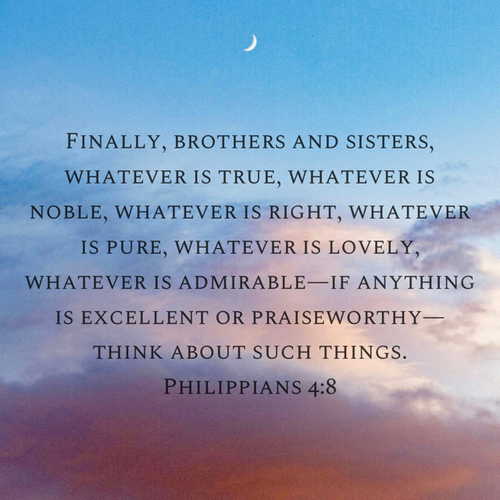
Verse for the road:
Question for you
What's a movie that always makes you feel better, that you would consider to be a noble story?
Archive
2026
January
February
May
June
National Religious Broadcasters Convention Highlights: Where Faith, Film, and Real Conversations MeetThe Dreamers Collective - 2026 GatheringsUpside Down Comedy - 2026 GatheringsLiving in the Hidden MomentsDance for Joy - 2026 GatheringsExploitation in Entertainment - 2026 Prayer CallsUp Next Gen Z Fellowship - 2026 Gatherings
August
Warner Bros. Prayer Walk - 2026 Prayer WalksHPN AI Create Night: AI Hands-On Workshop for Christian CreativesStagelight Actor's Fellowship - 2026 GatheringsWestside Entertainment Professionals Social - 2026 GatheringsReflections on the First 25 Years of Hollywood Prayer NetworkPraying Producers - 2026 GatheringsDirecTruth - 2026 GatheringsAdorned Fashion Fellowship - 2026 GatheringsKWA Screenwriters Meeting - 2026 GatheringsPrologue Writer's Fellowship - 2026 GatheringsBetween Takes - 2026 Gatherings
September
2025
March
April
May
June
July
August
September
October
November
Artist Wellness WorkshopStagelight Actors Fellowship - 2025 Gatherings"1st Mondays" Prayer & Worship Nights 2025Praying Producers - 2025 GatheringsAdorned Fashion Fellowship Launch - November 2025Service of Song - 2025 GatheringsMeasure for Measure - 2025 GatheringsHPN Professional Discipleship Program Commencement: The Future of Hollywood21 Nights of ThanksgivingPrologue Writer's Fellowship - 2025 Meetings